


What Digital Transformation Really Means01
Digital transformation is one of the most frequently used terms in IT and business, but because of this, it often loses its meaning. For some companies, it is the implementation of CRM, for others — automation of reporting, for others — the development of a new digital product. In practice, digital transformation is changing processes, approaches, and the company's operating model using technology, not just implementing individual tools.
By 2026, digital transformation ceased to be an experiment or a competitive advantage — for many industries it became a condition for survival. Companies that do not change digital processes lose speed, flexibility, and contact with customers.
In this article, we will analyze real cases of digital transformation, what challenges companies face in IT, what mistakes they make, and what conclusions can be drawn based on practice.
What Requests Do Companies Bring to Digital Transformation02
In real projects, digital transformation almost never starts with the formulation "we need digital transformation." More often, the request sounds different:
- "We do not understand what is happening in the business"
- "Processes are too slow"
- "The system does not scale"
- "Data is fragmented"
- "Customers are dissatisfied with the service"
Behind these formulations, there is almost always one problem — digital tools do not support the current business model.
Case 1. Transformation of Internal Processes03
Initial Situation
A medium-sized company with active growth. Internal processes are based on:
- tables,
- email,
- manual approvals,
- several unrelated systems.
With the growth of the business:
- the number of errors increases,
- decision-making times grow,
- management finds it difficult to obtain relevant data.
Solution
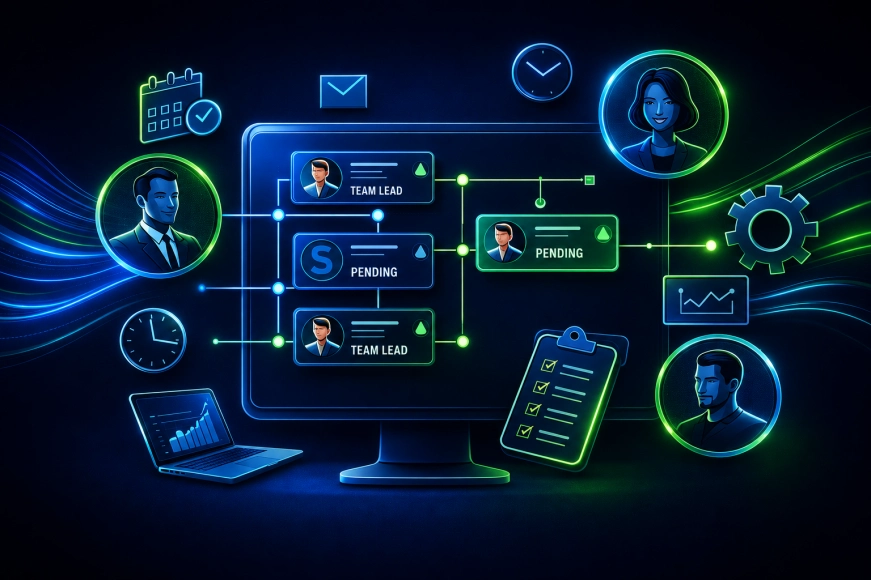
Digital transformation began not with the development of a «big system», but with the analysis of processes. Based on this, the following was created:
- a unified digital platform,
- automation of key scenarios,
- centralized data management.
Result
- reduction of operational costs,
- transparency of processes,
- the ability to scale without increasing chaos.
Case 2. Digital Transformation of Customer Service04
Initial Situation
A company with a large number of clients and a high load on support. Communication channels are fragmented:
- email,
- telephony,
- messengers,
- website.
There is no unified picture of customer interaction.
Solution
The digital transformation was aimed at:
- integration of all channels,
- automation of processing requests,
- implementation of customer behavior analytics.
It is important that the technologies were selected for real scenarios, not the other way around.
Result
- reduction of response time,
- increase in customer satisfaction,
- increase in repeat sales.

Common Digital Transformation Mistakes We See Most Often05
1. Starting with Technology Instead of Tasks
Implementing trendy tools without understanding what problem they solve.
2. Ignoring Processes
Automating chaos only leads to digital chaos.
3. Trying to Do Everything at Once
Digital transformation is a journey, not a one-time project.
Table 1. Digital Transformation Mistakes and Their Consequences
|
Error |
What it leads to |
|
Lack of strategy |
Waste of time and budget |
|
Disparate systems |
Data duplication |
|
Ignoring users |
Low engagement |
|
Lack of analytics |
Misunderstanding of the result |
Case 3. Transformation of the product and business model
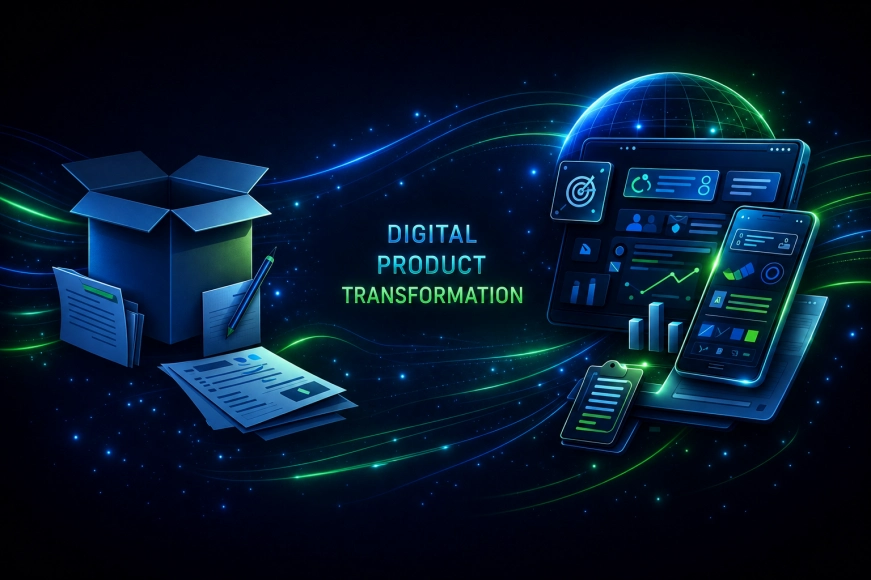
In some projects, digital transformation affects not only processes but also the product itself.
Example
The company is entering the digital channel with a new service:
- the logic of the product is being reconsidered,
- new user scenarios are being implemented,
- data becomes the basis for decision-making.
Here, digital transformation becomes part of the product strategy, rather than a supporting tool.
The role of the IT partner in digital transformation06
Digital transformation is rarely successful if viewed as solely an IT task. In reality, it is a collaborative effort:
- business,
- analysts,
- designers,
- architects,
- developers.
Our team and the RUSO team in such projects always start with understanding business goals, and only then select tools and architecture.
How to Measure the Success of Digital Transformation07
It is important to understand that digital transformation is not the implementation of a system, but changing metrics.
Key Metrics:
- process speed,
- reduction in the number of errors,
- growth in customer satisfaction,
- business manageability.
Table 2. Indicators Before and After Digital Transformation
|
Indicator |
Before |
After |
|
Task Processing Time |
Long |
Reduced |
|
Data Transparency |
Low |
Full |
|
Scalability |
Limited |
Flexible |
|
Service Quality |
Unstable |
Predictable |
Conclusions08
Digital transformation is not about technology for the sake of technology. It is about:
- redefining processes,
- working with data,
- flexibility,
- user and business outcome orientation.
Cases show that successful transformation always starts with analysis and strategy, not with tool selection.